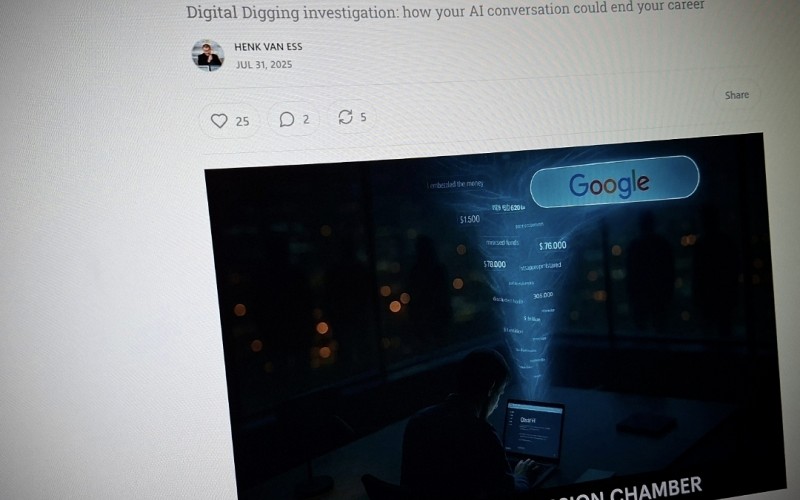
Corporate executives, government employees, and professionals are confessing to crimes, exposing trade secrets, and documenting career-ending admissions in ChatGPT conversations visible to anyone on the internet.
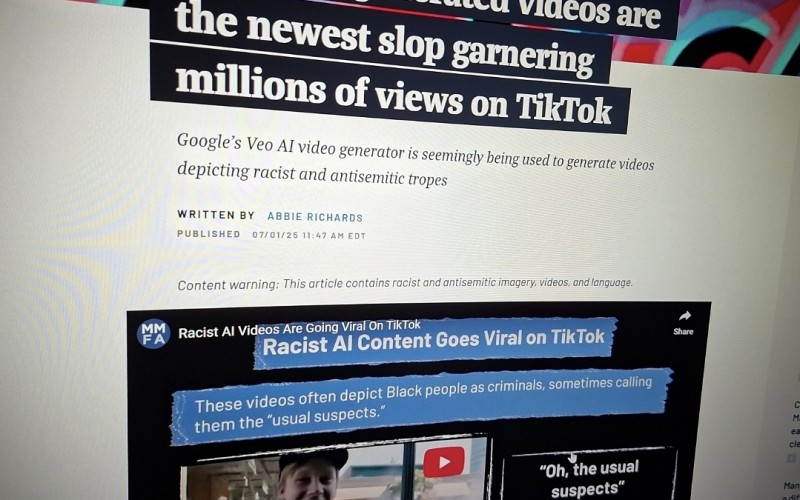
Racist and antisemitic AI-generated videos are getting millions of views on TikTok.
These videos — seemingly created with Google’s Veo 3, a publicly accessible text-to-video generator — traffic in racist tropes, such as depicting Black people as monkeys and criminals and featuring imagery of Black people with watermelons and fried chicken.
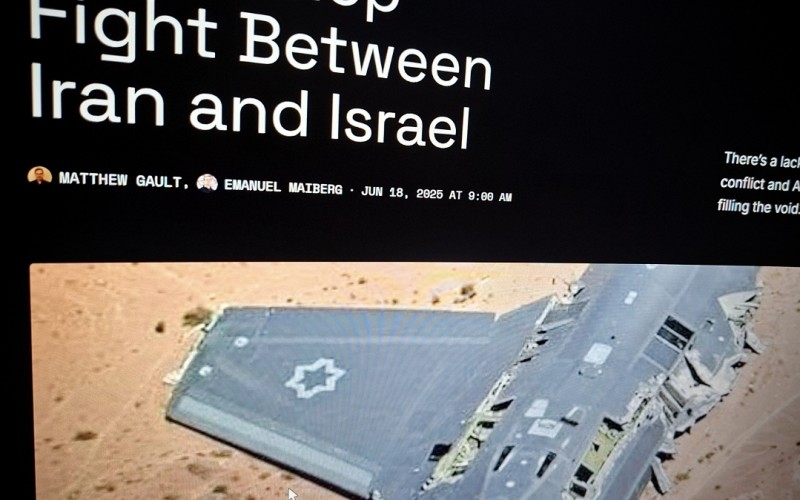
The fake videos and images show how generative AI has already become a staple of modern conflict. On one end, AI-generated content of unknown origin is filling the void created by state-sanctioned media blackouts with misinformation, and on the other end, the leaders of these countries are sharing AI-generated slop to spread the oldest forms of xenophobia and propaganda.
Waiting on the platform for a morning train that was nowhere to be seen, he asked Meta’s WhatsApp AI assistant for a contact number for TransPennine Express. The chatbot confidently sent him a mobile phone number for customer services, but it turned out to be the private number of a completely unconnected WhatsApp user 170 miles away in Oxfordshire.
"I had one patient whose relative started filming while I was trying to set up," said Ashley d'Aquino, a therapeutic radiographer from London.
"It wasn't the right time - I was trying to focus on delivering the treatment."
"We had a member of staff who agreed to take photos for a patient," she said.
"When the patient handed over her phone, the member of staff saw that the patient had also been covertly recording her, to publish on her cancer blog."
People are increasingly turning to social media for mental health support, yet research has revealed that many influencers are peddling misinformation, including misused therapeutic language, “quick fix” solutions and false claims.
Comments
make a comment